
CAC Nepal 2026 Organizing Committees
The Backbone of the Congress CAC Nepal 2026 planning committees play a pivotal role in organizing, promoting, and managing the Congress. Volunteers are essential to ensuring robust programmatic content, a safe and welcoming environment, and meaningful opportunities for student advancement and professional development.
By contributing to these committees, volunteers gain career-boosting skills in project management, team building, and event organization, all while helping SCB Asia deliver a forward-looking Congress that shapes the future of conservation in the region. The success of CAC Nepal 2026 rests on the dedication of the volunteers who strive to make the meeting exceptional for all attendees.
Learn more about:
- The Steering Committee
- The Congress Secretariat
- The Scientific Committee
- The Local Organizing Committee (LOC)
- The Awards Committee
- The Inclusion, Equity, and Diversity (IED) & Social Program Committee
- The Sustainability Coordination
Steering Committee
High-Level Governance & Strategy: The CAC Nepal 2026 Steering Committee holds overall responsibility for the conference's vision, development, and delivery, acting as the primary liaison with the SCB Global and SCB Asia Boards.
In line with the CAC Nepal 2026 Philosophy Statement, which provides a safe, inclusive, and accessible space for sharing cross-cultural insights and research, this committee guides the implementation of all conference aspects. The Secretariat and all specialized committees operate under the guidance of the Steering Committee to ensure alignment with these core values.
 Dr. Mohammad Farhadinia, CAC Nepal 2026 Co-Chair (DICE-Kent, UK)
 Dakshina Khadka, CAC Nepal 2026 Co-Chair (BCRCF, Nepal)
 Dr. Koustubh Sharma, SCBAs President (Snow Leopard Trust, Kyrgyzstan)
 Dr. Sayan Banerjee, Scientific Committee Co-Chair (SCB Asia, India)
 Dr. Prakash K Paudel, Host Chapter President (SCB Nepal Ch., Nepal)
 Pramod Yadav, Workshops & Training Chair (Sankala Foundation, India)
 Dr. Aishwarya Maheshwari, Finance Chair (SCB Asia, India/Cambodia)
 Dr. Wulan Pusparini, Partner Liaison (Arcus Foundation, UK)
 Niloufar Raeesi Chahartaghi, Sustainability Coordinator (Sunich, Iran)
 Hana Raza, EID & Social Program Chair (Leopard Beyond Borders, Iraq)
 Manoj Gautam, Host Organization Representative (BCRCF, Nepal)
Congress Secretariat
Central Administration & Coordination: The Congress Secretariat serves as the central administrative hub for CAC Nepal 2026, ensuring that day-to-day coordination aligns with the Steering Committee’s strategic vision.
Functioning as the primary point of contact for delegates, partners, and the SCB Asia Board, the Secretariat manages the administrative operations of the Congress. This includes overseeing registration inquiries and visa invitation letters, coordinating promotional materials and speaker announcements, managing submission data, and facilitating financial administration. The Secretariat bridges the gap between international leadership and the Local Organizing Committee to ensure strategic decisions are effectively communicated and implemented.
 Flavia Franchini Silveira, CACN26 Coordinator (SCBAs/Snow Leopard Net)
Scientific Committee
Curating Conservation Excellence: The CAC Nepal 2026 Scientific Committee is tasked with shaping a program that fosters collaboration, learning, and the dissemination of conservation science and traditional ecological knowledge across Asia. Their goal is to curate a dynamic program that empowers researchers, practitioners, policymakers, and students to exchange ideas and catalyze positive change in biodiversity conservation.
To achieve this, the committee manages the evaluation and selection of proposals and abstracts, ensuring a rigorous and high-quality scientific program. They are dedicated to fostering inclusivity by ensuring diverse disciplinary representation and content, while actively promoting the latest research in conservation science and practice to maximize the Congress's impact.
Scientific Committee Co-Chairs
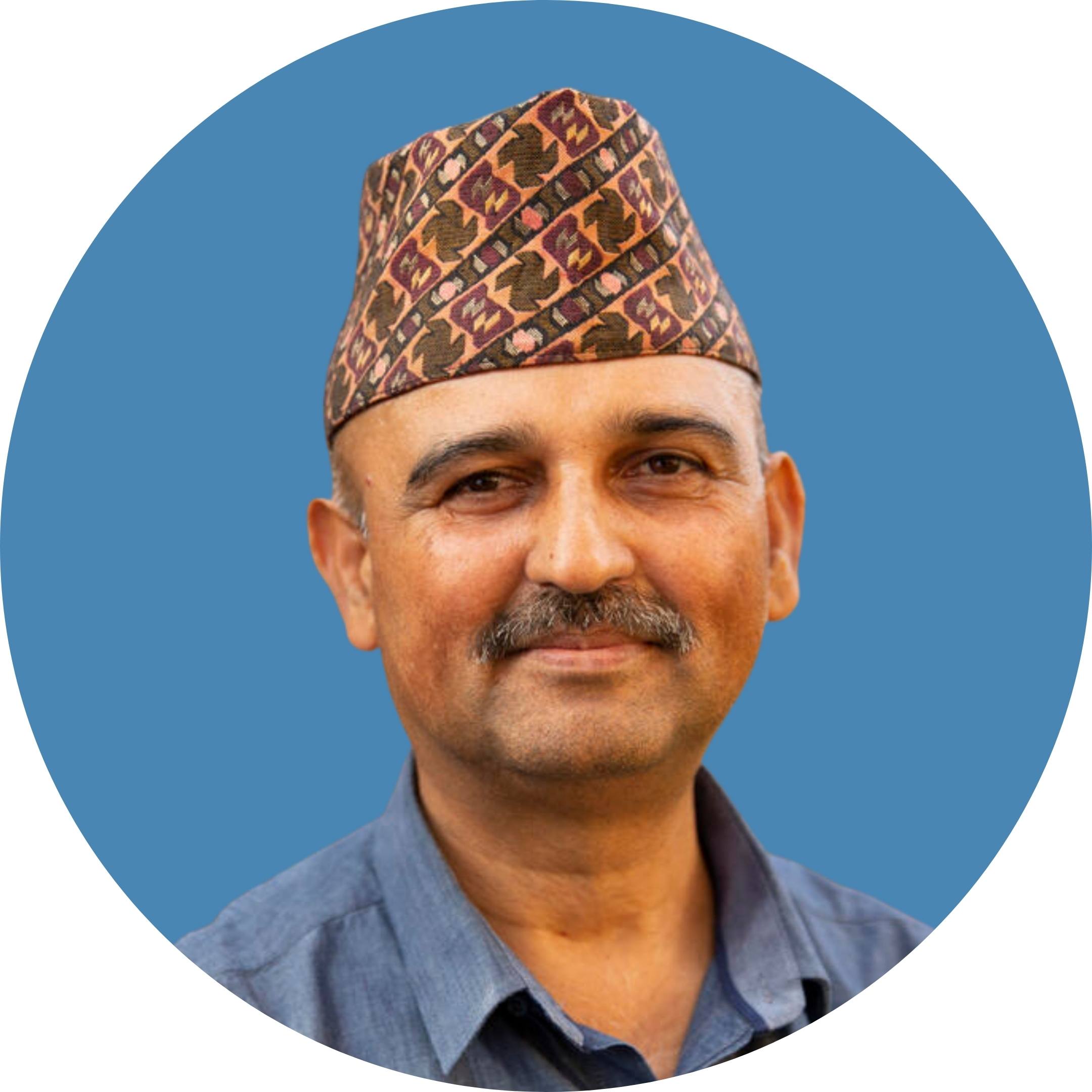 Dr. Hem Sagar Baral (Snow Leopard Trust, Nepal)
Dr. Sayan Banerjee (SCB Asia, India)
Committee Members
- Abhinaya Pathak, University of California, San Diego and DNPWC, USA
- Ahmed Aljohani, University of Oxford, United Kingdom/Saudi Arabia
- Alireza Mohammadi, University of Jiroft, Iran
- Ambika Prasad Khatiwada, National Trust for Nature Conservation (NTNC) and SCB Nepal Chapter, Nepal
- Anindya Sinha, University of Trans-Disciplinary Health Sciences and Technology, India
- Ankit Bilash Joshi, Bird Conservation Nepal, Nepal
- Apoorva Kulkarni, University of Oxford/ Independent Researcher, India
- Ardiantiono, University of Wisconsin-Madison; SCB Indonesia Chapter
- Arjun Thapa, PhD, Institute of Forestry, Tribhuvan University, Nepal
- Babu Ram Lamichhane, Wild Care Nepal, Nepal
- Badri Baral, Nature Conservation Initiative Nepal (NCI-Nepal), Nepal
- Chhatra Mani Sharma, Central Department of Environmental Science, Tribhuvan University, Nepal
- Chrishen Gomez, University of Oxford, Malaysia
- Dechen Lham, Eawag, Switzerland/Bhutan
- Dibesh Karmacharya, Center for Molecular Dynamics Nepal, Nepal
- Dibya Raj Dahal, PhD, Small Mammals Conservation and Research Foundation, Nepal
- Dibyadeep Chatterjee, Chester Zoo, UK, India
- Divya Karnad, University of Exeter, India
- Dr. Bishnu Prasad Bhattarai, Central Department of Zoology, Tribhuvan University, Nepal
- Dr. Laxman Khanal, Tribhuvan University, Nepal
- Ehab Eid, Senior Advisor, Jordan
- Ganga Ram Regmi, Third Pole Conservancy, Nepal
- Hari Prasad Sharma, Central Department of Zoology, T.U, Nepal
- Hem Bahadur Katuwal, Xishuangbanna Tropical Botanical Garden, Chinese Academy of Sciences, Nepal
- Hemanta Dhakal, PhD Scholar, Nepal
- Hemanta Kafley, Tarleton State University, USA
- Kamal Raj Gosai, Tri-Chandra Multiple Campus, Tribhuvan University, Nepal
- Laxman Prasad Poudyal, Nepalese Ornithological Union, Nepal
- Leili Khalatbari, CIBIO Research Centre in Biodiversity and Genetic Resources, Portugal
- Mahmood Soofi, Durrell Institute of Conservation and Ecology, United Kingdom
- Malavika Hosahally Narayana, Ashoka Trust for Research in Ecology and the Environment (ATREE), India
- Michaela Lo, DICE, United Kingdom
- Mohan Bikram Shrestha, Central South University of Forestry and Technology, Nepal
- Monsoon Pokharel Khatiwada, University of Oviedo / AACD / SCB Nepal, Nepal
- Muhammad Kabir, The University of Haripur, Pakistan
- Munib Khanyari, Nature Conservation Foundation and ICTA UAB, India
- Nandini Velho, Canopy Collective, India
- Nandintsetseg Dejid, Senckenberg Biodiversity and Climate Research Centre, Mongolia
- Narayan Prasad Koju, Nepal Engineering College, Pokhara University, Nepal
- Naresh Kusi, Himalayan Wolves Project, Norway
- Nobuyuki Yamaguchi, Oxford University and Hungarian Natural History Museum, Japan
- Paras B Singh, BIOCOS NEPAL, Nepal
- Phoebe Griffith, IGB / Himalayan Nature, Nepal and Germany
- Pramod Yadav, Sankala Foundation, India
- Rajkamal Goswami, ATREE, India
- Rama Mishra, Wild Care Nepal, Nepal
- Reshu Bashyal, Greenhood Nepal, Nepal
- Sabhrina Gita Aninta, University of Copenhagen, Indonesia
- Sagar Dahal, Florida International University, Nepal
- Saloni Bhatia, ATREE, India
- Samia Saif, Bangladesh
- Sanjan Thapa, Small Mammals Conservation and Research Foundation, Nepal
- Sanjeeta Sharma Pokharel, Kyoto University, Japan
- Shahriar Caesar Rahman, Creative Conservation Alliance, Bangladesh
- Shweta Shivakumar, Nature Conservation Foundation, India
- Surendranie Cabral de Mel, University of New England, Australia, Sri Lanka
- Taisiia Marchenkova, FSBI 'Land of the Leopard', Russia
- Tiasa Adhya, Fishing Cat Conservation Alliance, India
- Tulshi Laxmi Suwal, Small Mammals Conservation and Research Foundation, Nepal
- Uttara Mendiratta, NIAS, India
Local Organizing Committee (LOC)
On-Site Execution & Host Experience: The Local Organizing Committee (LOC) serves as the primary on-ground operational body for CAC Nepal 2026, responsible for the physical realization of the Congress in Kathmandu. Working in close coordination with the Steering Committee and Secretariat, the LOC manages all site-specific logistics, including venue operations, catering, local transportation, and accommodation partnerships.
Beyond logistics, the committee plays a vital role in government liaison and ensuring the safety and well-being of attendees. They are also dedicated to curating a culturally immersive experience, organizing field trips and social events that highlight Nepal’s rich biodiversity and warm hospitality, connecting international delegates with the local conservation community.
Chairs & Leads
- Dakshina Khadka, Logistics Chair (BCRCF, Nepal)
- Dr. Prakash K Paudel, Local Support Lead (SCB Nepal Chapter)
- Manoj Gautam, Venue & Strategy Lead (BCRCF, Nepal)
Committee Members
- Niraj Gautam, Logistics Manager (BCRCF, Nepal)
- Tejaskar Bickram Rana (BCRCF, Nepal)
- Prof. Dr. Bharat Babu Shrestha (SCB Nepal Chapter)
- Dr. Yadav Ghimirey (SCB Nepal Chapter)
- Dr. Damber Bista (SCB Nepal Chapter)
- Mr. Ambika Khatiwada (SCB Nepal Chapter)
- Ms. Monsoon Khatiwada (SCB Nepal Chapter)
- Mr. Gopal Khanal (SCB Nepal Chapter)
Awards Committee
Recognizing Excellence & Facilitating Access The Awards Committee is charged with overseeing the recognition of outstanding contributions to the field and ensuring equitable access to the Congress. To maintain the highest level of integrity and perspective, this committee is comprised exclusively of Steering Committee members and the Scientific Committee Chairs.
This leadership group leverages their comprehensive oversight to adjudicate two critical areas: the Student Awards Competition, which recognizes the most outstanding student presentation and poster contributions, and the Travel Support Scholarships, which enable participation for delegates with limited financial resources. By managing both portfolios, the committee ensures that resources are directed toward both celebrating research excellence and fostering inclusivity.
Inclusion, Equity, and Diversity (IED) & Social Program Committee
Advancing Justice & Building Community The CAC Nepal 2026 Inclusion, Diversity & Social Program Committee ensures that the Congress is not only an inclusive event but also a vibrant, connected community. This group works to advance justice in conservation while fostering meaningful professional relationships by embedding the principles of inclusion into every facet of the event—from scientific sessions to social gatherings.
To achieve this, the committee integrates accessibility considerations into event planning and enforces behavior expectations to create a safe, welcoming space. Simultaneously, they are responsible for curating a dynamic social program designed to facilitate networking and cross-cultural exchange, ensuring that all attendees—regardless of background—feel empowered to participate and connect.
Committee Members:
- Hana Raza, Chair (Leopard Beyond Borders, Iraq)
- Niloufar Raeesi Chahartaghi (Sunich Group, Iran)
- Dakshina Khadka (BCRCF, Nepal)
- Dr. Sayan Banerjee (SCBA, India)
- Dr. Prakash K Paudel (SCB Nepal, Nepal)
- Pramod Yadav (Sankala, India)
- Dr. Wulan Pusparini (Arcus Foundation, UK)
- Manoj Gautam (BCRCF, Nepal)
Sustainability Coordination
Minimizing Environmental Footprint: The CAC Nepal 2026 Sustainability Coordinator leads the effort to ensure the Congress embodies the conservation principles it promotes. By developing and implementing comprehensive green strategies, this role aims to minimize the event's environmental impact and set a standard for sustainable conferencing in the region.
To achieve this, the Coordinator collaborates closely with the Local Organizing Committee to enforce waste reduction and plastic-free protocols, oversee carbon footprint mitigation, and select vendors who prioritize eco-friendly practices. This ensures that every aspect of the Congress, from catering to transport, aligns with our commitment to planetary health.
- Niloufar Raeesi Chahartaghi (Sunich Group, Iran)