
Post-Congress Workshop (Saturday, June 6th)
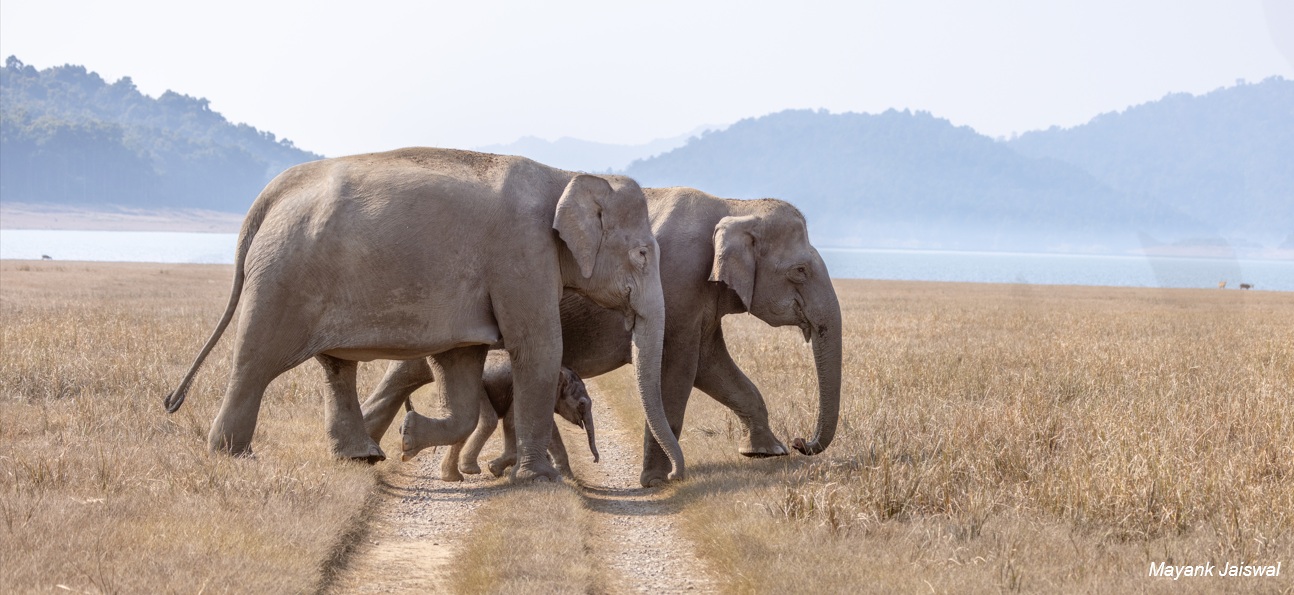
Elephants on the Brink: A Range-wide Assessment of Challenges and Opportunities (Full Day)
Time: 9 am - 5 pm (Full Day)
Venue: National Trust for Nature Conservation
Maximum Capacity: 30
Workshop details:
Across Asia, rapid infrastructure growth, land-use change, shifting crop patterns, and climate variability are reshaping elephant movement, behavior, and human–elephant conflict. Elephant populations are not changing in one direction everywhere. Some are stabilizing or expanding into working landscapes, while others remain small, fragmented, and highly threatened. In places with high elephant densities and fast development, the stakes for both people and elephants are especially high.
This full-day workshop provides a future-looking platform to synthesize where human–elephant coexistence work is heading and to share field-proven practices and advanced tools from across the species’ range. The day begins with short, structured case snapshots from participants to map emerging threats, spatiotemporal patterns of conflict, and institutional responsibilities. We then run a guided exchange of “what worked” and “what failed” across regions, focusing on why similar approaches succeed in some contexts and fail in others.
In small groups, participants will translate shared cases into practical coexistence action plans for selected settings. Each plan will define the emerging context, summarize risks, clarify responsible actors and coordination needs, identify recommended tools and minimum data requirements, and propose a short indicator set to track effectiveness, costs, and fairness. We close with a plenary synthesis to highlight transferable practices, common gaps, and practical directions for the next decade of coexistence work in Asia.
► Participants will leave with editable templates, an indicator menu, and consolidated action plans that can be reused in management practice and project proposals.
Workshop Outline:
Across Asia, rapid infrastructure growth, land-use change, shifting crop patterns, and climate variability are reshaping elephant movement, conflict risk, and the feasibility of coexistence. This full-day workshop provides a future-looking platform to synthesize where human-elephant coexistence work is heading, compare approaches across range states, and identify practical directions participants can take back to their own landscapes.
Objectives:
(1) Build a shared baseline on elephant status and conflict contexts across Asia,
(2) Surface emerging threats and “failure points” that current interventions are not addressing,
(3) Exchange field-proven practices and understand why they succeed or fail in different settings, and
(4) Translate lessons into simple, context-matched action plans with measurable indicators.
Agenda (09:00–17:00):
- Welcome and objectives; participant introductions and short “case landscape” snapshots.
- Regional status mapping in small groups (habitats, population trends, connectivity, conflict patterns, and responsible institutions).
- Current and emerging threats: group rotations on infrastructure and fragmentation, land-use and cropping change and seasonality, and governance and social drivers.
- Promoting coexistence: a guided “success-failure clinic” where groups diagnose interventions (mechanism, costs, equity, common failure modes, and fixes).
- Tools to support coexistence: match tools to context and minimum data needs (for example incident reporting, risk mapping, corridor prioritization, fence auditing and standards, rapid response workflows, community monitoring), then select a short indicator set for effectiveness, cost, safety, and fairness.
- Plenary synthesis and closing: consolidate transferable practices, priority gaps, and next steps for cross-country learning and collaboration.
Target Audience:
Conservation practitioners, protected-area managers, government staff, NGO teams, researchers, and students working on Asian elephants or human-wildlife conflict.
Prerequisites:
None. Participants are encouraged to bring one example landscape or case they know well (a few sentences are enough).
Organizers:
- Dr. Sanjaya Weerakkody, Megafauna Ecology and Conservation Group, XTBG, Chinese Academy of Sciences, China (sanjaya@xtbg.ac.cn)
- Dr. Aritra Kshettry, WWF-India, New Delhi, India (akshettry@wwfindia.net)
- Prof Ahimsa Campos-Arceiz, Megafauna Ecology and Conservation Group, XTBG, Chinese Academy of Sciences, China (ahimsa@xtbg.ac.cn)
Workshop Convenor: Sanjaya Weerakkody (sanjaya@xtbg.ac.cn), XTBG, China
Workshop registration rate: Free
Language: English
Registration link: Register via the main CAC Nepal 2026 Portal: "Registration Module."